A Small Business Innovation Research (SBIR) award can help an eligible small business turn promising academic research into a working prototype without giving up equity. But building a successful prototype and getting software authorized to operate on a War Department (DOW) network are two very different things. An application can work perfectly in a research environment and still require substantial engineering work before the government can use it.
My experience on both sides of the authorization process has taught me that the origin of an application doesn’t necessarily determine how difficult it will be to authorize. Research-backed teams face many of the same challenges as established commercial software vendors, although the resources and experience available to them can be quite different.
For university spin-outs and research teams pursuing SBIR or Small Business Technology Transfer (STTR) funding, understanding government security requirements early can help prevent expensive engineering problems later in development. Three considerations are particularly important:
The gap: Academic research often depends on open collaboration, shared data, and rapid experimentation. Government environments impose stricter requirements around access, data handling, and third-party services. Software developed without those constraints in mind may require substantial rework before deployment.
The requirement: Security obligations depend on the information a research team handles, the terms of its government contracts, and the environment where its software will operate. Requirements involving controlled unclassified information (CUI), supply chain risk, and AI-assisted development need to be considered before deployment.
The path forward: Designing for the intended government environment from the beginning, and inheriting security controls from a pre-accredited platform where appropriate, can reduce the engineering burden on research teams working with limited resources.
Where academic research and government security requirements diverge
Academic research and government software development often begin with very different assumptions about access. University laboratories generally encourage collaboration, allowing researchers to share information, work across institutions, and incorporate outside tools as their projects evolve. Government security environments, on the other hand, are designed to control who can access information, what services can connect to a system, and how data moves across its boundaries.
Neither approach is inherently wrong. The challenge comes when an application designed for a collaborative research environment needs to operate in an environment requiring much tighter control over users, services, and information.
Consider a research application that depends on a commercial mapping service, an external software library, and a third-party API. During prototyping, the development team may have little reason to question whether the application can connect to those resources, but moving the same software into a regulated environment such as AWS GovCloud introduces additional requirements. External connections may need explicit authorization, certain cloud-native services may not be available, and the software supply chain may require considerably more scrutiny than the research team anticipated.
User access creates similar challenges. Researchers accustomed to relatively permissive account management may need to implement stronger authentication, role separation, and explicit data access controls before their software can process government information. Depending on the environment, access may involve Common Access Cards (CACs), restricted network connections, or additional controls governing data entering and leaving the application. These requirements can affect how users interact with the software, how administrators maintain it, and how the application communicates with other systems.
I don’t think research-origin teams are uniquely deficient in security engineering. Technical debt, incomplete documentation, and difficulty translating security objectives into functional requirements are common across software organizations, regardless of where the code originated. University-affiliated teams may, however, have less experience navigating government requirements, particularly when the application has been developed by graduate students or researchers whose primary expertise is in the underlying science.
On the resource side, early-stage SBIR teams often have smaller budgets and fewer specialized personnel than established independent software vendors (ISVs), making security engineering and compliance documentation more difficult to manage alongside product development. Even with fewer resources, I wouldn’t assume a research-backed team will necessarily take longer to obtain authorization. A small, highly motivated group with a strong understanding of its application and codebase can move just as quickly as a larger commercial organization.
Ultimately, the authorization timeline has more to do with the resources committed to the process, the complexity of the software, and the requirements of the intended environment than with whether the application originated in a university or a commercial company.
How SBIR-funded research moves toward government deployment
Before getting into the technical requirements, it’s worth separating the funding process from the authorization process. Obtaining an SBIR award and obtaining authorization to operate software are related in some circumstances, but one doesn’t automatically drive the other.
University-affiliated research centers can pursue defense research and development through several pathways, not all of which require SBIR funding. Some work directly with government organizations through cooperative research and development agreements (CRADAs), while others collaborate with small businesses pursuing SBIR or STTR funding. STTR is specifically designed to support partnerships between small businesses and research institutions, providing another route for academic research to reach government missions.
For many early-stage teams, the path to working with the government begins with identifying a problem their research might solve. A demonstration at a conference, a conversation with a Mission Owner, or an introduction through an innovation organization such as AFWERX or SpaceWERX can help connect a developing capability to a government requirement. An interested sponsor may lead to an SBIR opportunity, but research funding doesn’t automatically authorize an application to process government data.
Congress reauthorized the SBIR and STTR programs through fiscal year 2031, providing greater planning certainty for research organizations. The legislation also introduced measures intended to support commercialization, helping research-backed businesses move from funded prototypes toward technologies government or commercial customers can use. At the program level, AFWERX and SpaceWERX are moving toward ‘Focused Open Topics’ identifying specific government capability gaps and inviting innovative solutions to address them. For academic teams, understanding the intended mission and its requirements is becoming an increasingly important part of pursuing research opportunities.
While SBIR funding can help a research team develop software for a government mission, the security requirements depend on the information the application will process, the terms of its contract, and the environment where it will operate. Understanding the intended deployment environment early allows researchers to account for the appropriate security requirements before making architectural decisions that may be difficult to reverse.
Design for the highest planned impact level from the beginning
If I could give a research team one piece of advice before government deployment is even on its immediate roadmap, it would be to begin with the end in mind. Understand the most restrictive environment where the software is likely to operate, and account for the corresponding security requirements while you’re designing the application.
Government cloud environments are divided into Impact Levels according to the sensitivity of the information they process. For example, a team currently pursuing DOW Impact Level 4 (IL4) authorization but planning to deploy at IL5 in the future should account for IL5 requirements during initial development. Designing for the more restrictive environment from the beginning can help avoid significant rework when the application eventually needs to meet higher security requirements.
Some security requirements can be addressed through configuration changes or additional controls, while others are much harder to implement after development is complete. Strong authentication, role separation, and explicit data flow controls, for example, can be difficult to retrofit if the application’s architecture wasn’t designed to support them. Depending on how the software was originally built, meeting a higher Impact Level could require substantial rework or even a complete redesign. For a closer look at the requirements associated with each level, see Understanding DoD cloud Impact Levels (IL2–IL6): A complete guide.
The consequences of early architectural decisions become particularly clear when it comes to managing user accounts. NIST SP 800-53 control AC-2 establishes requirements for account management, but meeting government identity and access requirements can involve considerably more than implementing a password policy. Depending on the environment, an application may need to support CAC or Personal Identity Verification (PIV) authentication, federated identity through OpenID Connect or SAML, separation of privileged roles, and detailed session logging.
A research team that hardcodes authentication methods or builds its user model around a basic commercial login system may discover the architecture can’t support those requirements without significant changes. Retrofitting strong authentication, role separation, and explicit data flow controls after development is complete can mean going back into the application’s underlying logic and reworking previously built functionality.
The external services a research team chooses during development can also affect whether an application will function in a government environment. A service available in a commercial cloud region may not exist in the intended government region, particularly in classified environments. If the application relies on an unavailable service, the development team may need to replace the dependency or redesign how information moves through the system.
I’m not suggesting every research prototype needs to implement the most restrictive controls imaginable. The point is to anticipate the application’s likely destination and design for the requirements the software will eventually need to meet. Some security features may remain inactive until the software reaches a particular environment, but accommodating those capabilities during initial development is generally easier than rebuilding the application later.
Research teams developing software for classified missions may also need to obtain security clearances and access to approved facilities before deployment. Depending on the mission, an organization may need a Facility Security Clearance (FCL), personnel with appropriate security clearances, or access to a Sensitive Compartmented Information Facility (SCIF). Even with those requirements met, the application must still undergo the appropriate security assessment and obtain authorization to operate on the intended classified network.
The engineering decisions made during prototyping can have consequences well beyond the initial research award. Understanding the eventual deployment environment gives teams an opportunity to make those decisions deliberately, rather than discovering during authorization that fundamental parts of the application need to be rebuilt.
Field Guide
Guide to Public Sector Entry
Unfiltered perspectives from the founders, investors, and procurement leads actively shaping the gov tech landscape.
Government data requirements can begin before deployment
One assumption I’d encourage research teams to reconsider is that compliance only becomes relevant when an application is ready to operate on a government network. Depending on the information an organization receives or generates under its contract, some security obligations begin much earlier.
For a university lab or SBIR-backed team, protecting government information may be a requirement during research and development, not simply something to address before production deployment. Defense Federal Acquisition Regulation Supplement (DFARS) clause 252.204-7012, for example, requires contractors handling covered defense information to implement applicable security requirements under NIST Special Publication 800-171, report qualifying cyber incidents within 72 hours, and ensure subcontractors handling the information meet the same safeguarding obligations.
University researchers shouldn’t assume the freedom to publish fundamental research means all the information they work with can be shared without restriction. Under the Fundamental Research Exclusion, results of qualifying research generally fall outside certain export controls under the International Traffic in Arms Regulations (ITAR) and Export Administration Regulations (EAR). However, when a university handles controlled unclassified information (CUI) under a government contract with applicable safeguarding requirements, researchers must still protect the information and restrict access to the systems where it’s stored or processed. The ability to publish research findings doesn’t override contractual obligations to protect government information.
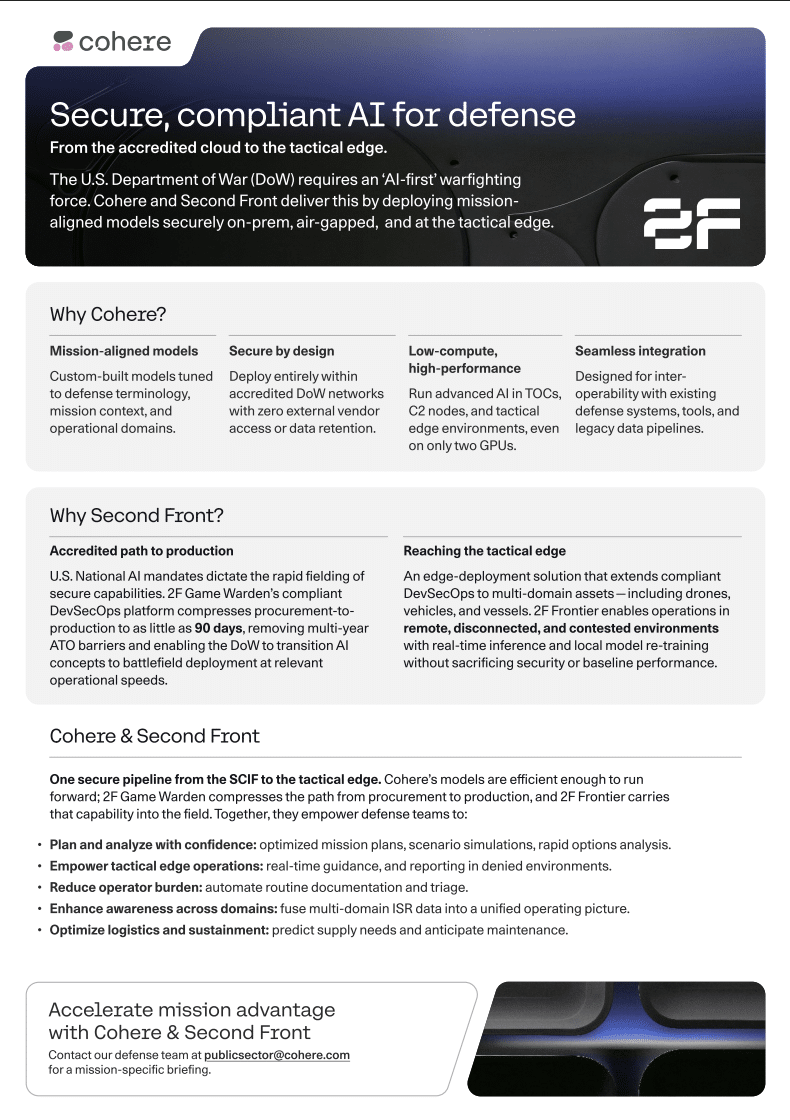
For universities handling CUI, separating government research workloads from broader campus infrastructure can help limit the scope of their security responsibilities. Rather than building and maintaining every component of a dedicated environment independently, research teams can use an accredited Platform-as-a-Service (PaaS), such as 2F Game Warden, to deploy applications within an established security boundary and inherit applicable infrastructure controls. Universities must still protect government information and meet the security requirements associated with their own users, systems, and applications, but an accredited platform can reduce the infrastructure work required for government deployment.
Software supply chain and foreign influence introduce additional considerations
Researchers often rely on third-party code, libraries, APIs, and external services to accelerate experimentation and build sophisticated software without developing every function themselves. While there’s nothing inherently wrong with using third-party software, research teams need to understand where those components come from, how they’re maintained, and whether they introduce unacceptable risks in the intended government environment.
DOW security reviews place greater emphasis on software supply chain risk management, particularly the origin of third-party components and the organizations responsible for developing or maintaining them. DoD Instruction 5200.44 requires applicable defense programs to identify critical system components and assess supply chain risks throughout the system lifecycle, while NIST SP 800-161 provides guidance for evaluating suppliers and mitigating security threats. For research teams, meeting the applicable requirements may involve documenting where software libraries and external services originate, who maintains them, and how potential vulnerabilities are identified and addressed.
Research organizations often collaborate across national boundaries, bringing together international researchers, development teams, and academic partners. Depending on the nature of the work, offshore development resources and participation by foreign nationals may require additional review under applicable security, access, or export-control requirements. Foreign Ownership, Control, or Influence (FOCI) can also affect government contracting and security determinations when foreign interests have the ability to influence the organization developing the capability.
International collaboration isn’t inherently incompatible with government research, but a research team’s software dependencies, personnel, and ownership arrangements must still satisfy the security requirements of the intended mission. Evaluating potential risks early gives teams time to address security concerns before they become obstacles to deployment.
AI-assisted development adds another layer of responsibility
Academic research teams increasingly use coding assistants, large language models, and other generative AI tools to write code, produce documentation, and explore technical solutions without expanding their engineering teams. However, development practices that work in a commercial or academic environment may need to change when government information is involved.
The Department’s Accelerated Mission Software instruction (DoWI 8430.01) establishes requirements for software development, security, and accountability, including restrictions on generative AI. Although certain research and development activities fall outside the instruction’s scope, covered software becomes subject to the requirements when it transitions toward acquisition or operational use. For covered development efforts, developers can only share non-public DOW information, such as source code, configuration scripts, infrastructure definitions, and documentation, with generative AI services operating on approved DOW information systems. Assurances from a commercial AI provider about data retention or model training don’t satisfy the Department’s hosting and approval requirements on their own.
Using an approved AI tool also doesn’t remove the developer’s responsibility for the resulting software. AI-generated code remains subject to testing and security review, changes involving security- or safety-critical functionality require human approval, and development teams must maintain records of the models, versions, and significant datasets used to generate or test software.
For researchers preparing to work with government information, the goal is to understand which tools are permitted, what information can be shared with them, and how AI-generated outputs must be validated under the applicable requirements. Addressing those questions early allows research teams to continue using AI where appropriate without introducing avoidable security problems.
How control inheritance changes the authorization process
For research teams with limited engineering resources, developing the application is only part of the work required for government deployment. Teams may also need to implement infrastructure safeguards, document their security architecture, collect assessment evidence, and maintain continuous monitoring after authorization. While larger commercial software companies may already have experience with frameworks such as SOC 2 or ISO standards, research-origin organizations often have to learn government security requirements alongside product development.
Government authorization is a specialized discipline, with its own terminology, assessment methods, and decision processes. I wouldn’t expect every research team to be able to develop expertise in all of those areas while also building a new capability. Working with an experienced infrastructure partner can reduce the burden, particularly through a process known as control inheritance.
Under the Risk Management Framework (RMF), control inheritance allows an application to rely on applicable security controls that an underlying provider has already implemented and assessed. Rather than independently building and validating every infrastructure safeguard, the development team can inherit documented common controls while retaining responsibility for the security requirements specific to its software.
The amount of security work a team can inherit depends partly on its deployment environment. According to Second Front’s control inheritance analysis, an organization deploying directly onto Infrastructure-as-a-Service (IaaS), such as AWS GovCloud or Microsoft Azure Government infrastructure, may inherit approximately 20% of the relevant security control baseline. The development team remains responsible for substantial work involving system hardening, security maintenance, and authorization evidence.
An accredited DevSecOps Platform-as-a-Service (PaaS), such as 2F Game Warden, can increase the proportion of inherited controls to more than 60%, depending on the authorization pathway and deployment boundary. By managing substantial portions of the underlying security architecture, infrastructure monitoring, and operational safeguards, Game Warden allows developers to focus on the controls specific to their applications. Developers still need to address authentication, application logic, data handling, and other responsibilities within their scope, but they don’t have to recreate safeguards the platform has already implemented and demonstrated. For a more detailed explanation, see How to Maximize Control Inheritance: A Guide to Reducing Your NIST 800-53 Workload.
Reducing the amount of independent security work can also lower the cost of deployment. In my analysis of the total cost of ownership of independent FedRAMP certification, I examined how engineering, security tooling, documentation, and ongoing monitoring contribute to compliance expenses. A typical do-it-yourself FedRAMP certification effort can cost approximately $1.5 million in its first year, while complex implementations can reach $3.7 million or more.
Although DOW Impact Level authorization follows different requirements and carries different costs, the underlying resource tradeoff is similar. Every engineer dedicated to building and maintaining security infrastructure is an engineer who isn’t developing application features, improving performance, or responding to customer needs.
Integrate, a program management software company that progressed through the SBIR program, demonstrates how an authorized platform can accelerate government deployment. The company used Game Warden to deploy into an IL6 classified environment in under 12 months, compared with the two to three years often associated with traditional authorization efforts at that IL. The deployment supported Integrate’s progression through the SBIR program, including a $25 million Phase III award from the U.S. Space Force.
For research teams looking to address security requirements before pursuing authorization, 2F Workshop provides an environment for developing and testing software with government security considerations in mind, helping teams identify potential issues during prototyping rather than discovering them during deployment.
Government authorization is not the end of the security process
As a former Authorizing Official, I know obtaining an Authority to Operate (ATO) doesn’t mean a development team can stop worrying about security. Software changes, new vulnerabilities emerge, and operating environments evolve, requiring teams to manage security risks throughout the application’s operational lifecycle. For research organizations with limited security resources, Second Front’s Game Warden helps reduce the ongoing workload through continuous vulnerability scanning, infrastructure monitoring, and automated security evidence collection. Establishing the necessary processes and support early allows organizations to continue improving their software while maintaining the security requirements of the missions they support. Developers remain responsible for addressing vulnerabilities and maintaining the controls specific to their applications, but they don’t have to manage every aspect of security independently.
The DOW’s developing Cybersecurity Risk Management Construct (CSRMC) reflects a broader emphasis on continuous risk management, although RMF continues to govern most authorization efforts. Second Front CTO Josh Bosquez and I explored the Department’s direction in our analysis of the DOW’s CSRMC.
Build for the mission, not just the prototype
A successful demonstration, an SBIR award, or an interested Mission Owner can help move academic research toward government deployment, but none guarantees the software is ready for its intended operating environment. Research-backed teams often have a deep understanding of their technology and codebase, which can be an advantage when identifying and addressing government security requirements early in development.
For principal investigators, technical leads, and founders considering government deployment, the first step is identifying the most sensitive information the application may need to process and the most restrictive environment where it’s likely to operate. Use those requirements to guide decisions about authentication, data flows, external services, and third-party dependencies while the software’s architecture can still accommodate changes. Some controls can be added as an application matures, while others may require substantial rework if they weren’t considered during initial development.
For a closer look at SBIR/STTR performance benchmarks, download our Field Guide: Public Sector Tips for Startups. If your organization is preparing to move research-backed software into a government environment, connect with Second Front to learn how Game Warden can reduce the authorization burden while allowing your team to focus on developing its capability.